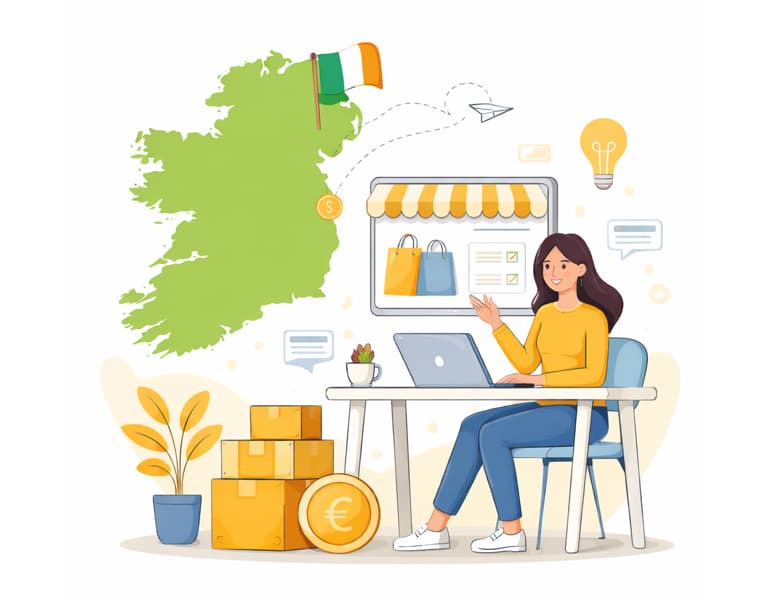
Ireland has become a hotspot for digital entrepreneurs, and for good reason. The country boasts excellent internet infrastructure that rivals anywhere in Europe. Add to that a population comfortable with online shopping and a government keen to support startups.
Sounds perfect, right?
Well, not quite. Running a successful online business in Ireland still demands hard work, smart planning, and a genuine understanding of your market. You’ll face competition from both local players and international giants operating here. The digital space grows more crowded each month.
This guide will walk you through the practical steps that separate successful online businesses from those that fizzle out within a year. We’ll cover everything from legal setup to scaling strategies. You’ll also learn about the mistakes you should avoid.
Choosing Your Business Model Wisely
Not every online business model works equally well in Ireland. Some scale smoothly while others struggle with costs or logistics.
Service-based businesses often grow faster at the start. Consultants, designers, coaches, and specialists avoid shipping costs and stock risks. Digital products also work well, especially when they solve clear problems or save time. Physical products can succeed too, but they demand careful planning around fulfilment, pricing, and margins.
A successful online business in Ireland aligns the model with your skills and resources. It also leaves room to grow. Chasing every option leads to scattered effort.
Legal Requirements and Business Setup
Let’s tackle the boring but important stuff first. You’ll need to register with the Companies Registration Office, though sole traders face simpler requirements than limited companies. Choose your structure carefully because it affects liability and future growth options.
Also, don’t put off sorting your tax situation.
Data protection isn’t something you can ignore in Ireland. The General Data Protection Regulation (GDPR) applies to every online business collecting customer information. You must explain clearly what data you collect, why you need it, how you protect it, and how long you keep it.
Your website needs proper terms and conditions that protect both you and your customers. A privacy policy explains your data practices in plain English. Cookie notices inform visitors about the tracking technologies you use.
Building Your Online Presence That Converts
Your website is where everything happens. Visitors form opinions within three seconds of landing on your homepage. That means your design must look professional, load instantly, and work flawlessly on mobile devices.
Speed isn’t negotiable anymore.
Irish internet users expect pages to load in under two seconds. Anything slower and they’re gone, probably to a competitor’s site.
Navigation should also feel so intuitive that users never think about it. Can someone find your bestselling product in two clicks? Can they locate your contact details without scrolling endlessly? Complicated menus kill conversions faster than almost anything else.
Marketing Your Online Business Effectively
Organic search traffic provides sustainable growth that compounds over time. Search engine optimisation helps the right people find you when they’re actively looking for solutions. Target keywords that match actual search behaviour, not just what sounds good.
Content marketing builds authority whilst attracting your ideal audience. Blog posts that genuinely help people get shared and linked to naturally. Videos demonstrate products or explain concepts more effectively than text alone. Podcasts let you connect with audiences during their commutes.
Social media requires strategic choices about where you invest time. LinkedIn delivers strong results for B2B companies targeting Irish professionals. Instagram suits visual products and lifestyle brands beautifully. TikTok reaches younger demographics with creative, entertaining content.
Paid advertising can also accelerate growth but demands careful management. Google Ads captures people actively searching for solutions right now. Facebook and Instagram ads build awareness among people who don’t know they need you yet.
Managing Operations and Fulfilment Smoothly
Operations separate businesses that scale from those that collapse under growth. Systems and processes sound boring, but they save hours every week. Document everything as you build it, even simple tasks.
Inventory management prevents the twin disasters of stockouts and overselling. Make sure you choose software that integrates seamlessly with your sales channels. Automation reduces manual work and eliminates human errors that frustrate customers.
Also, remember that the quality of your customer service predicts long-term success more accurately than almost any other factor. Respond to enquiries within hours, not days. Solve problems with genuine empathy rather than scripted responses.
Consider outsourcing tasks that don’t require your specific expertise. Virtual assistants handle admin work remotely for reasonable rates, while freelancers provide specialised skills exactly when you need them.
This frees you to focus on strategic decisions and revenue-generating activities.
Managing Money and Momentum
Cash flow problems kill more businesses than competition ever does. Monitor your income and expenses weekly without fail. Maintain reserves that cover at least three months of operating costs.
Many entrepreneurs struggle with pricing their products or services correctly.
Too cheap suggests poor quality to customers who’ve learned that you get what you pay for. Too expensive prices take you out of consideration entirely, especially when competitors offer similar value. Finding that sweet spot requires research and testing.
Payment processing choices also impact conversion rates more than most people realise. Your customers expect multiple payment options, including credit and debit cards. Stripe and other modern processors make integration straightforward.
Growing Your Customer Base Strategically
Attracting new customers requires understanding where they spend time and what problems keep them awake at night.
Customers will most likely ignore generic marketing messages. Specificity cuts through the clutter, and here’s what you should do:
- Focus your initial marketing on one clear customer segment rather than trying to appeal to everyone simultaneously.
- Test different messaging angles to discover which resonates strongest with your target audience.
- Analyse competitors to identify underserved niches within your broader market.
- Partner with complementary businesses to access their established customer bases through joint promotions.
Content that educates builds trust faster than content that sells. Create resources that genuinely help your target customers solve problems. Position yourself as a knowledgeable guide rather than a pushy salesperson.
Referral programmes turn satisfied customers into active promoters. You can offer meaningful incentives for bringing friends and family and make the referral process simple with shareable links and clear instructions.
Local search engine optimisation (SEO) also matters significantly for businesses serving Irish customers primarily. Claim your Google Business Profile and optimise it thoroughly. Encourage happy customers to leave reviews consistently.
Scaling Your Successful Online Business in Ireland
Growth requires deliberate strategy rather than hoping for the best. Don’t expand before your foundation feels rock solid. Scale what already works rather than constantly chasing new opportunities.
Data reveals your best growth opportunities. Ask yourself: Which products sell fastest and generate the highest margins? What marketing channels deliver the strongest returns on investment?
Double down on these winners aggressively.
Hiring your first team member will feel scary, but it’ll become necessary eventually. Be sure to delegate tasks that don’t require your specific expertise or decision-making authority.
This lets you focus your energy on highest-value activities like strategy and key relationships.
Building Customer Loyalty and Retention
Acquiring new customers typically costs more than retaining existing ones. Yet many businesses obsess over acquisition whilst neglecting retention. This backward approach limits growth and profitability unnecessarily.
Personalisation shows customers you see them as individuals.
Remember their preferences and previous purchases. Recommend products that genuinely suit their needs rather than pushing bestsellers indiscriminately.
Loyalty programmes reward repeat business and referrals systematically. Points systems encourage customers to return frequently, while exclusive perks make members feel valued and special.
Community building creates emotional connections beyond transactional relationships. Private Facebook groups foster discussions among customers with shared interests. Events or webinars bring people together meaningfully, strengthening bonds with your brand.
What problems do your customers face repeatedly? Create resources that solve these issues. Position yourself as a trusted advisor who cares about their success, not just their money.
Feedback loops help you improve continuously. Ask customers about their experiences regularly through surveys and personal outreach, and act on suggestions visibly to show you listen and care.
Adapting to Challenges and Changes
Every business faces obstacles that test resilience and creativity. Technology evolves constantly, requiring ongoing learning and adaptation. Consumer preferences also shift with cultural and economic changes beyond your control.
Flexibility beats rigid planning every time.
What worked brilliantly last year might fail miserably next year. Monitor trends carefully, but don’t chase every shiny object that appears. Competition may also intensify as profitable markets attract new entrants. Differentiation becomes more important over time, not less.
Find your unique angle and own it completely.
Common Mistakes to Avoid
Learning from others’ mistakes saves time, money, and heartache. These pitfalls catch countless entrepreneurs despite seeming obvious in hindsight. They include:
- Launching products without validating real customer demand
- Underpricing products to attract customers
- Focusing on revenue while ignoring cash flow realities
- Trying to manage every task without outside support
- Neglecting customer service
If you are wary about these common pitfalls, you have a better chance of running a successful online business in Ireland.
Turning Your Online Business Vision into Reality in Ireland
Running a successful online business in Ireland requires discipline, commitment, creativity, adaptability, and a genuine desire to serve customers well.
Start where you are with what you have available right now. Perfect timing doesn’t exist in entrepreneurship. Take action today rather than waiting for everything to align perfectly. The future of Irish online business is waiting for you to lead.