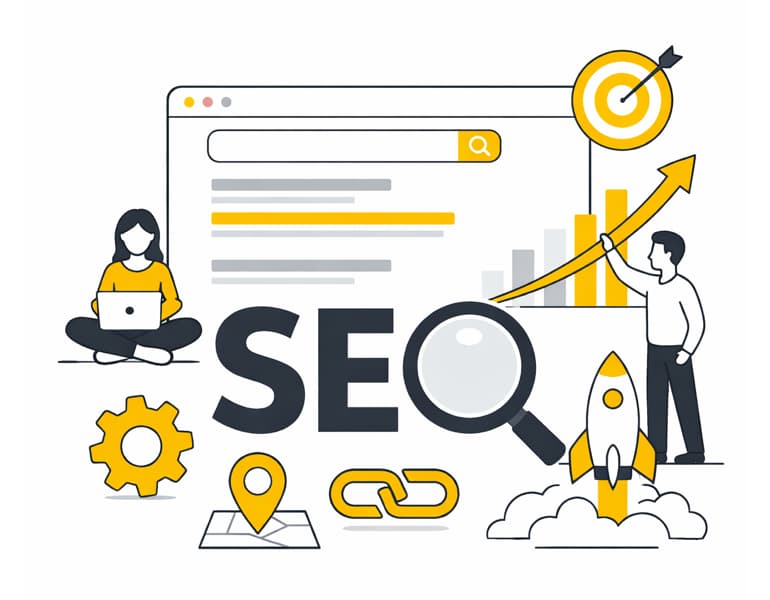
In today’s digital landscape, having a website is simply not enough. With billions of web pages competing for attention, how do you ensure that your business stands out? How do potential customers find you amongst the vast ocean of online content? The answer lies in three powerful letters: SEO.
Search Engine Optimisation, or SEO, has become the cornerstone of digital marketing success. It’s the difference between a website that languishes in obscurity on page ten of Google’s search results and one that captures prime position on page one, driving consistent traffic, leads, and revenue. Yet despite its critical importance, SEO remains shrouded in mystery for many business owners and marketers.
This comprehensive guide will demystify SEO, exploring what it is, how it works, and why it matters for your business. Whether you’re a complete beginner or looking to deepen your understanding, you’ll discover the fundamental principles that govern search engine rankings and learn how to harness them to grow your online presence.
Understanding SEO: The Fundamentals
What is SEO?
Search Engine Optimisation (SEO) is the practice of improving your website to increase its visibility when people search for products, services, or information related to your business on search engines like Google, Bing, and Yahoo. The better visibility your pages have in search results, the more likely you are to attract attention and draw prospective and existing customers to your business.
At its core, SEO is about understanding what people are searching for online, the answers they’re seeking, the words they’re using, and the type of content they wish to consume. Knowing the answers to these questions allows you to connect with the people who are searching online for the solutions you offer.
Why is SEO Important?
The statistics speak for themselves. Google processes over 8.5 billion searches per day, and 93% of online experiences begin with a search engine. Furthermore, the first five organic results account for 67.6% of all clicks, whilst results on page two and beyond receive less than 1% of clicks.
For businesses, this presents both an enormous opportunity and a significant challenge. If your website appears prominently in search results for relevant queries, you’ll benefit from a steady stream of targeted traffic. However, if you’re buried on page three or beyond, you might as well be invisible.
Unlike paid advertising, where visibility stops the moment you stop paying, SEO provides sustainable, long-term value. Once you’ve achieved strong rankings, you can maintain them with ongoing optimisation, enjoying continuous traffic without paying for each click.
How Search Engines Work
To understand how SEO works, you must first understand how search engines operate. Search engines like Google use sophisticated algorithms to deliver the most relevant, high-quality results for every search query.
This process involves three fundamental stages:
Crawling: Search engines deploy automated bots, commonly called “spiders” or “crawlers,” to discover content across the web. These bots follow links from one page to another, collecting information about each page they visit.
Indexing: Once content is discovered, search engines analyse and store it in their index—a massive database of all the content they’ve found. During indexing, search engines assess what each page is about, examining factors like keywords, content quality, freshness, and user engagement signals.
Ranking: When someone performs a search, the search engine scours its index to provide the most relevant and useful results, ranking them based on hundreds of factors. This is where SEO makes its greatest impact—by optimising various elements of your website, you can improve how search engines perceive and rank your content.
The Core Components of SEO
SEO is multifaceted, encompassing numerous strategies and techniques. However, it can be broadly divided into three main categories: on-page SEO, off-page SEO, and technical SEO.
On-Page SEO
On-page SEO refers to the optimisation of elements directly within your website that you can control. These factors help search engines understand your content and determine its relevance to specific search queries.
Keyword Research and Optimisation
Keywords are the foundation of SEO. They’re the words and phrases that people type into search engines when looking for information. Effective keyword research involves identifying the terms your target audience uses and strategically incorporating them into your content.
Modern keyword research goes beyond simply finding high-volume search terms. You need to understand:
- Search intent: Why is someone searching for this term? Are they looking to buy, learn, or find a specific website?
- Competition: How difficult will it be to rank for this keyword?
- Relevance: Does this keyword align with what your business offers?
- Long-tail keywords: Longer, more specific phrases that typically have lower search volume but higher conversion rates.
Once you’ve identified your target keywords, they should be naturally incorporated into your content, including page titles, headings, body text, and meta descriptions.
Content Quality
Content is king in the world of SEO. Search engines aim to provide users with the most valuable, comprehensive, and relevant content for their queries. High-quality content should be:
- Original: Unique content that provides fresh perspectives or information.
- Comprehensive: Thoroughly covering topics to fully answer user queries.
- Well-written: Clear, engaging, and free from grammatical errors.
- Regularly updated: Fresh content signals to search engines that your site is active and relevant.
- User-focused: Written primarily for human readers, not search engines.
Title Tags and Meta Descriptions
Title tags are HTML elements that specify the title of a web page. They appear in search results as the clickable headline and are crucial for both SEO and user experience. An effective title tag should:
- Include your primary keyword near the beginning
- Be compelling and accurately describe the page content
- Stay within 50-60 characters to avoid truncation in search results
Meta descriptions, whilst not a direct ranking factor, influence click-through rates. These brief summaries (150-160 characters) appear beneath your title in search results and should entice users to click through to your site.
Header Tags
Header tags (H1, H2, H3, etc.) structure your content hierarchically, making it easier for both users and search engines to understand. Your H1 should contain your primary keyword and clearly indicate what the page is about. Subsequent headers (H2, H3) should organise content into logical sections, improving readability and SEO.
URL Structure
Clean, descriptive URLs help search engines and users understand what a page is about before visiting it. Best practices include:
- Keeping URLs short and readable
- Including target keywords
- Using hyphens to separate words
- Avoiding unnecessary parameters and numbers
Internal Linking
Internal links connect different pages within your website. They help search engines discover and index your content, establish information hierarchy, and distribute page authority throughout your site. Strategic internal linking can significantly boost your SEO performance by helping search engines understand your site’s structure and the relationships between different pages.
Image Optimisation
Images enhance user experience but need optimisation to benefit SEO. This includes:
- Using descriptive, keyword-rich file names
- Adding alt text that describes the image (crucial for accessibility and SEO)
- Compressing images to improve page load speed
- Using appropriate file formats
Off-Page SEO
Off-page SEO encompasses activities outside your website that impact your rankings, primarily focusing on building your site’s reputation and authority.
Link Building
Backlinks—links from other websites to yours—remain one of the most important ranking factors. Search engines view backlinks as votes of confidence; when reputable sites link to you, it signals that your content is valuable and trustworthy.
However, not all backlinks are created equal. Quality trumps quantity. A single link from a respected, authoritative website in your industry is worth far more than dozens of links from low-quality or irrelevant sites.
Effective link building strategies include:
- Creating link-worthy content: Exceptional content naturally attracts backlinks.
- Guest posting: Writing articles for other reputable websites in your industry.
- Digital PR: Earning media coverage and mentions from news sites and publications.
- Broken link building: Finding broken links on other sites and suggesting your content as a replacement.
- Resource page link building: Getting featured on curated lists and resource pages.
Brand Mentions
Even unlinked brand mentions (when websites mention your brand without linking to it) can influence your SEO. Search engines recognise these mentions as indicators of brand awareness and authority.
Social Signals
Whilst the direct impact of social media on search rankings is debated, there’s no question that social media activity can indirectly benefit SEO. Content that’s widely shared on social platforms tends to attract more backlinks, traffic, and engagement—all factors that positively influence rankings.
Technical SEO
Technical SEO focuses on improving the technical aspects of your website to help search engines crawl, index, and understand your content more effectively.
Site Speed
Website page load speed is a confirmed ranking factor and critically important for user experience. Slow-loading sites frustrate users, increase bounce rates, and negatively impact rankings. Improving site speed involves:
- Optimising and compressing images
- Minimising HTTP requests
- Enabling browser caching
- Minifying CSS, JavaScript, and HTML
- Using a content delivery network (CDN)
- Choosing quality hosting
Mobile-Friendliness
With mobile devices accounting for over half of all web traffic, Google now uses mobile-first indexing, meaning it primarily uses the mobile version of your site for ranking and indexing. Your site must provide an excellent experience on mobile devices, with:
- Responsive design that adapts to different screen sizes
- Easily clickable buttons and links
- Readable text without zooming
- Fast loading times on mobile networks
Site Architecture
A logical, well-organised site structure helps search engines crawl your site efficiently and helps users navigate easily. Best practices include:
- Creating a clear hierarchy with main categories and subcategories
- Ensuring important pages are no more than three clicks from the homepage
- Implementing breadcrumb navigation
- Creating an XML sitemap
HTTPS and Security
Security is paramount. Google confirmed HTTPS as a ranking signal, and modern browsers flag non-HTTPS sites as “not secure,” which can deter visitors. Implementing SSL certificates to enable HTTPS is essential for both SEO and user trust.
Structured Data
Structured data (schema markup) is code that helps search engines better understand your content. It enables rich snippets—enhanced search results that can include star ratings, pricing, images, and other information—which improve visibility and click-through rates.
XML Sitemaps
An XML sitemap is a file that lists all important pages on your website, helping search engines discover and index your content more efficiently. It’s particularly valuable for larger sites, new sites, or sites with pages that aren’t well-linked internally.
Robots.txt
The robots.txt file instructs search engine crawlers which pages or sections of your site they should or shouldn’t crawl. Proper configuration prevents search engines from wasting time on unimportant pages and focuses their attention on your most valuable content.
How Search Engine Algorithms Work
Understanding search engine algorithms—the complex systems that determine rankings—is crucial for effective SEO.
The Evolution of Google’s Algorithm
Google’s algorithm has evolved dramatically since the search engine’s inception. Early versions could be easily manipulated through keyword stuffing and link schemes. However, major updates have made the algorithm increasingly sophisticated:
Panda (2011): Targeted low-quality, thin content, penalising sites with duplicate or poorly written content.
Penguin (2012): Focused on unnatural link building practices, penalising sites engaged in manipulative link schemes.
Hummingbird (2013): Improved understanding of search intent and context, enabling better interpretation of conversational queries.
Mobile-Friendly Update (2015): Prioritised mobile-friendly sites in mobile search results.
RankBrain (2015): Introduced machine learning to better understand search queries and content relevance.
BERT (2019): Enhanced natural language processing to better understand the context and nuance of words in searches.
Core Web Vitals (2021): Made page experience a ranking factor, focusing on loading performance, interactivity, and visual stability.
Key Ranking Factors
Whilst Google uses over 200 ranking factors, some carry more weight than others:
- Content quality and relevance: The most important factor—does your content thoroughly address the search query?
- Backlinks: Quality and quantity of links pointing to your site.
- User experience: How users interact with your site, including dwell time, bounce rate, and click-through rate.
- Page speed: How quickly your pages load.
- Mobile-friendliness: How well your site performs on mobile devices.
- Domain authority: Your site’s overall trustworthiness and expertise.
- Freshness: How recently content was published or updated.
- Secure connection: HTTPS encryption.
- Keyword optimisation: Appropriate use of target keywords throughout your content.
Local SEO: Reaching Nearby Customers
For businesses serving specific geographic areas, local SEO is essential. It optimises your online presence to attract customers from local searches.
Google Business Profile
Your Google Business Profile (formerly Google My Business) is crucial for local SEO. This free listing appears in local search results and Google Maps, displaying vital information like your address, phone number, hours, and customer reviews.
Optimising your profile involves:
- Ensuring all information is accurate and complete
- Selecting appropriate business categories
- Adding high-quality photos
- Encouraging and responding to customer reviews
- Posting regular updates
Local Citations
Citations—mentions of your business name, address, and phone number (NAP) on other websites—build local SEO authority. Consistency is critical; your NAP should be identical across all platforms, including directories, social media, and your website.
Local Content
Creating content relevant to your local area helps establish local relevance. This might include:
- Blog posts about local events or news
- Location-specific landing pages
- Local guides and resources
- Case studies featuring local customers
Online Reviews
Reviews significantly influence both search rankings and consumer behaviour. Positive reviews build trust and authority, whilst actively managing and responding to reviews demonstrates engagement and customer care.
Measuring SEO Success
Effective SEO requires ongoing measurement and analysis. Key metrics include:
Organic Traffic
The number of visitors arriving at your site from search engines is the most direct measure of SEO success. Tools like Google Analytics track organic traffic, showing trends over time and identifying which pages attract the most visitors.
Keyword Rankings
Monitoring where your pages rank for target keywords helps assess your SEO progress. However, rankings alone don’t guarantee success—they must translate into traffic and conversions.
Click-Through Rate (CTR)
CTR measures the percentage of people who click your listing after seeing it in search results. Low CTR despite high rankings suggests your titles and meta descriptions need improvement.
Conversion Rate
Ultimately, SEO should drive business results. Conversion rate—the percentage of visitors who complete desired actions (purchases, enquiries, sign-ups)—measures how effectively your site turns traffic into customers.
Bounce Rate
Bounce rate indicates the percentage of visitors who leave your site after viewing only one page. High bounce rates may signal poor content quality, slow loading times, or misleading meta descriptions.
Page Load Time
Monitoring load times helps ensure your site remains fast, protecting both user experience and rankings.
Backlink Profile
Tracking the number and quality of backlinks helps assess your off-page SEO efforts and identify link building opportunities.
Common SEO Mistakes to Avoid
Even well-intentioned efforts can backfire if you fall into common SEO traps:
Keyword Stuffing
Unnaturally cramming keywords into content harms readability and can trigger penalties. Focus on natural, user-friendly writing that incorporates keywords appropriately.
Neglecting Mobile Users
With mobile-first indexing, ignoring mobile optimisation is catastrophic for SEO. Ensure your site provides excellent mobile experiences.
Ignoring Technical Issues
Broken links, slow loading times, crawl errors, and other technical problems undermine SEO efforts. Regular technical audits identify and resolve these issues.
Buying Links
Purchasing backlinks violates Google’s guidelines and can result in severe penalties. Focus on earning links through quality content and legitimate outreach.
Duplicate Content
Publishing identical or very similar content across multiple pages confuses search engines and dilutes ranking potential. Each page should offer unique value.
Neglecting Analytics
SEO without measurement is guesswork. Regularly reviewing analytics data helps you understand what’s working and where improvements are needed.
Expecting Instant Results
SEO is a long-term strategy. Significant results typically take three to six months, sometimes longer for competitive keywords. Patience and persistence are essential.
The Future of SEO
SEO continues evolving as search engines become more sophisticated and user behaviours change.
Artificial Intelligence
AI and machine learning increasingly power search algorithms, enabling better understanding of content quality, relevance, and user intent. Optimising for AI means focusing on comprehensive, high-quality content that genuinely serves user needs.
Voice Search
As smart speakers and voice assistants proliferate, voice search optimisation grows in importance. Voice queries tend to be longer and more conversational, requiring content that addresses natural language questions.
Video Content
Video content consumption continues rising, and search engines increasingly feature video results. Creating and optimising video content offers valuable SEO opportunities.
User Experience
Google’s emphasis on user experience signals will likely strengthen. Core Web Vitals and other experience metrics will become increasingly important ranking factors.
E-A-T
Expertise, Authoritativeness, and Trustworthiness (E-A-T) have become critical, especially for sites in sensitive sectors like health and finance. Demonstrating credentials, earning quality backlinks, and maintaining excellent reputations will grow more important.
Conclusion
SEO is both an art and a science, requiring technical knowledge, creative thinking, and strategic planning. Whilst the field can seem complex and ever-changing, its fundamental principles remain constant: create valuable, user-focused content, build a technically sound website, and establish your site’s authority and trustworthiness.
The beauty of SEO lies in its democratic nature. Unlike paid advertising, where bigger budgets typically win, effective SEO allows smaller businesses to compete with larger competitors by providing superior value to users. Success doesn’t require enormous resources—it requires understanding, dedication, and a commitment to serving your audience’s needs.
For Irish businesses and those serving the Irish market, SEO represents an invaluable opportunity to connect with customers actively searching for your products or services. Whether you’re a local Dublin café or a national e-commerce retailer, implementing sound SEO practices can dramatically increase your online visibility and drive sustainable business growth.
Remember, SEO is not a one-time task but an ongoing process. Search algorithms evolve, competitors emerge, and user behaviours shift. Staying informed about industry developments, regularly auditing your site’s performance, and continuously optimising your approach ensures you maintain and improve your search visibility over time.
By understanding what SEO is and how it works, you’ve taken the first crucial step towards harnessing its power for your business. The next step is implementation—applying these principles to build a strong, visible online presence that attracts customers and drives results for years to come.